
5 REASONS WHY THE NURSE WITH THE WEAKEST CHART SPENDS 8 HOURS IN A DEPOSITION — AND THE OTHER WALKS OUT IN 20 MINUTES
★★★★★
4.9 Stars — 11,000+ Verified Nurse Readers
1.
IT ALWAYS STARTS THE SAME WAY: A PATIENT YOU BARELY REMEMBER
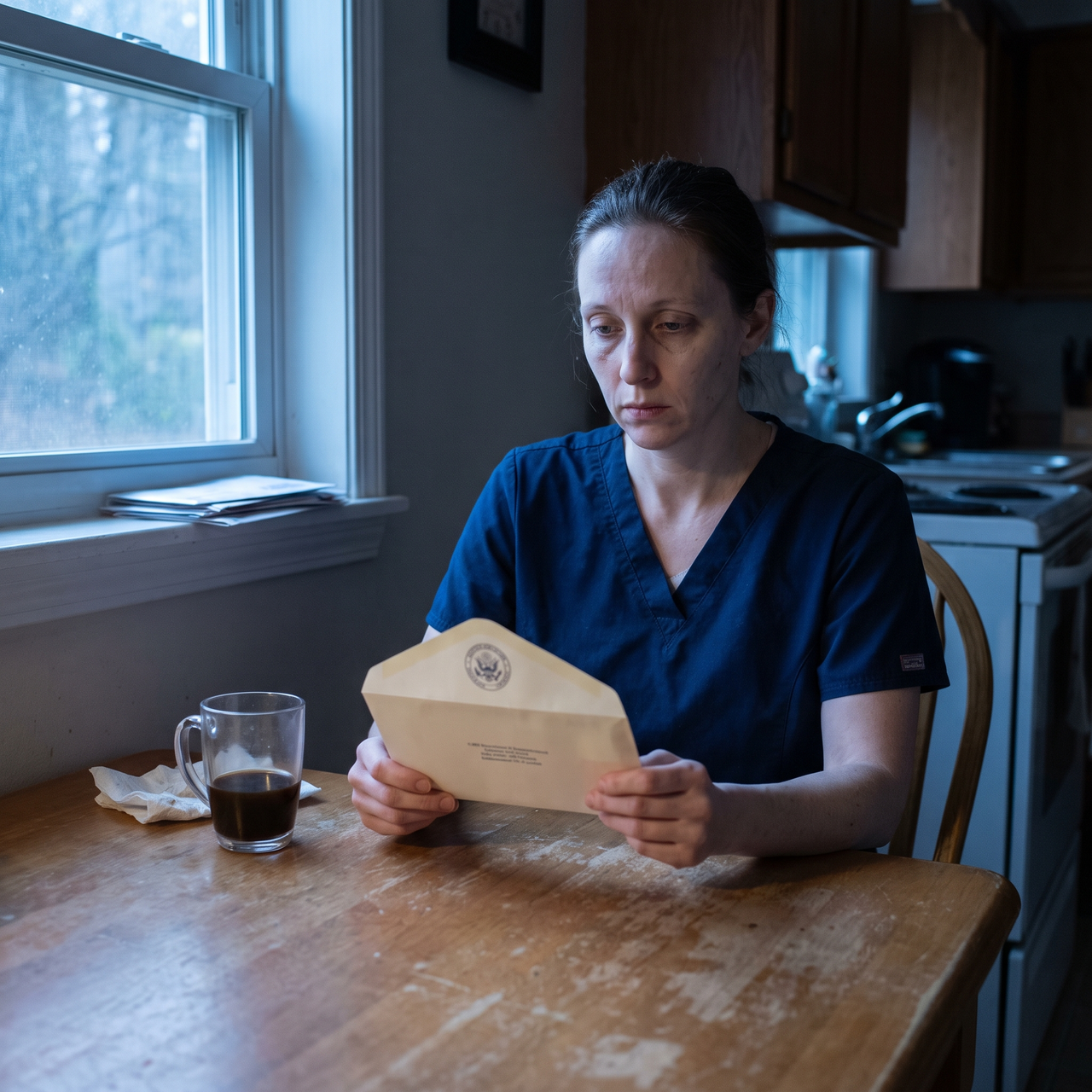
Three years pass. Then one ordinary morning, a letter arrives. There's a name on it you can't quite place, a date that means nothing to you, a shift you couldn't picture if your life depended on it. And somehow, you're now expected to account for every decision you made that day — down to the word.
That's the part that makes your stomach drop. Not that you did anything wrong. You almost certainly didn't. But memory doesn't work the way the legal system pretends it does. You've cared for thousands of patients since. The details of that one shift are simply gone.
And here's the quiet cruelty of it: you'll be held accountable not just for what you remember, but for everything you didn't write down. A gap in the chart isn't read as "she was busy." It's read as "she didn't do it." Three years later, the only version of that shift that still exists is the one you typed when you were exhausted and running on empty — and now it has to speak for you.
IT CAME OUT OF NOWHERE
Teresa K.

Verified Buyer
"I got a subpoena for a patient I cared for two and a half years earlier. I couldn't remember a thing about that shift. The panic of realizing my chart was the only thing standing between me and a lawsuit is something I'll never forget."
2.
THE LONGER YOU TALK, THE DEEPER YOU SINK
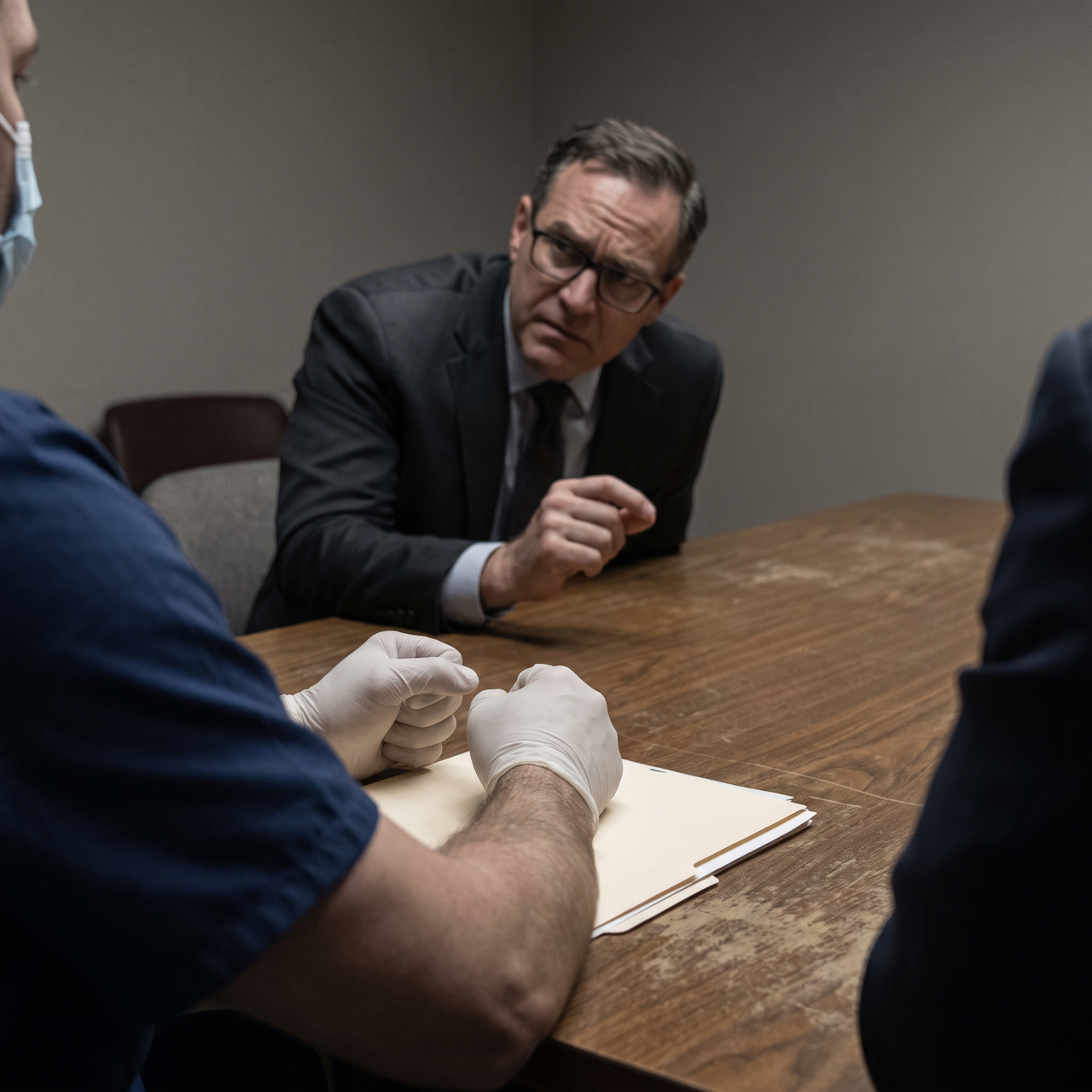
Here's what almost no nurse understands until she's in that chair: the attorney across the table is in no hurry. Time is on their side, not yours. Every pause you try to fill, every "I think what probably happened was," every instinct to explain yourself — that's exactly what they're waiting for.
Because the human instinct in that room is to be helpful. To remember. To fill the gaps and defend your care out loud. And that instinct is the trap. Speculation becomes contradiction. Contradiction becomes doubt. Eight hours in, a completely competent nurse can be walked, sentence by sentence, into sounding negligent about care she delivered perfectly.
That's how it happens. Not because the nurse was bad at her job — because she tried to reconstruct from memory what the chart should have carried on its own. The weak chart forces you to talk. And the more you talk, the more material you hand them. The nurse who spends eight hours in that room isn't a worse clinician. She just walked in with documentation that couldn't defend her, so she was left to do it herself — under oath, on the worst day of her career.
THE PART NOBODY WARNS YOU ABOUT
Denise H.
Verified Buyer
"I always thought if I ever got deposed, I'd just explain what happened. This made me realize explaining is exactly what they want you to do. That reframe alone changed how I chart every single shift now."

3.
BUT IT DOESN'T HAVE TO GO THAT WAY
Now picture a different nurse, same letter, same room, same attorney. Except she isn't scrambling to remember and she isn't afraid. When the questions come, she doesn't reach into a three-year fog. She points to the page — because everything they're fishing for is already there, in writing, exactly the way she meant it.
Here's the pivot almost no one understands until it's too late. The nurse who walks out in twenty minutes isn't quicker on her feet, and she isn't a better clinician. She simply isn't relying on memory at all. Her chart already answered every question before the room even opened. She has nothing to reconstruct, nothing to speculate about, nothing to contradict.
That's the entire difference between the two outcomes — and it has almost nothing to do with skill at the bedside. Your instinct, your judgment, the call you got exactly right at 3 a.m. — none of it protects you in that room if the chart doesn't carry it. The chart is the only version of you the attorney can question. It either stands on its own, or it leaves you talking for eight hours. Most nurses were never taught to write the first kind. One legal nurse consultant set out to change that.
FINALLY UNDERSTOOD THE REAL ISSUE
Priya S.
Verified Buyer
"I always assumed being a good nurse was enough to protect me. This showed me the chart is what protects you, not your memory or your reputation. Completely changed how I think about every note. I wish I'd had it fifteen years ago."
4.
THERE'S A WAY TO WRITE SO THE RECORD SPEAKS FOR YOU
The reason it works when other resources don't: it's a way of reading your own notes, not a pile of tips. You learn to see one phrase the way a plaintiff's attorney will, then the next, and each fix quietly makes the one after it easier. You're never asked to chart more or stay later — just to write the same note a smarter way, so it stands on its own years from now.
A few of the first fixes:
Kill the phrase that hangs nurses — Swap "will continue to monitor" for a specific, documented action, so it can't be twisted into proof you saw a problem and did nothing.
Pair every quote with a fact — Follow a patient's words with an objective finding, so no lawyer can argue you wrote it to mock or dismiss them.
Prove you escalated — Document the call the moment you make it, so there's a record you notified the provider — not just your word two years later.
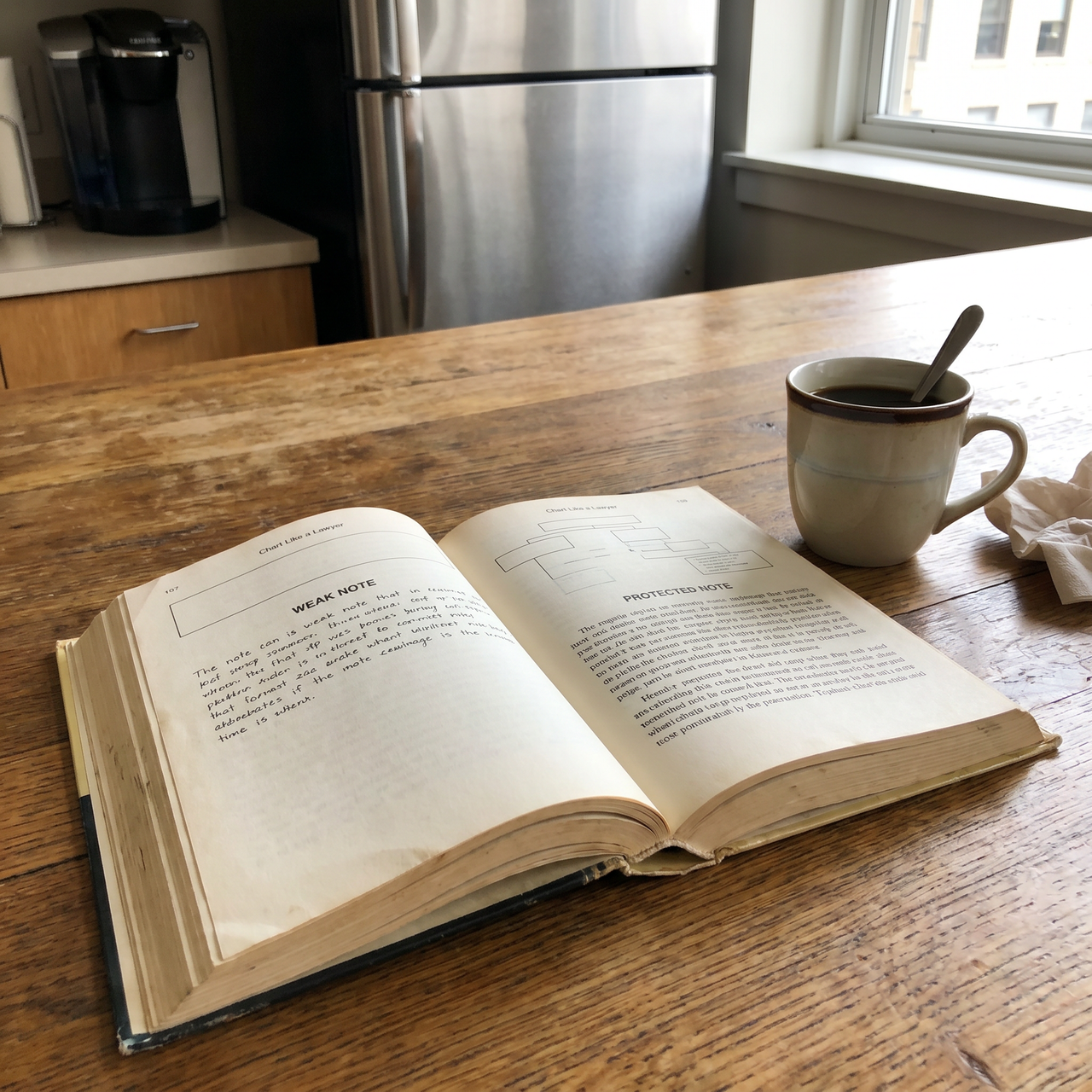
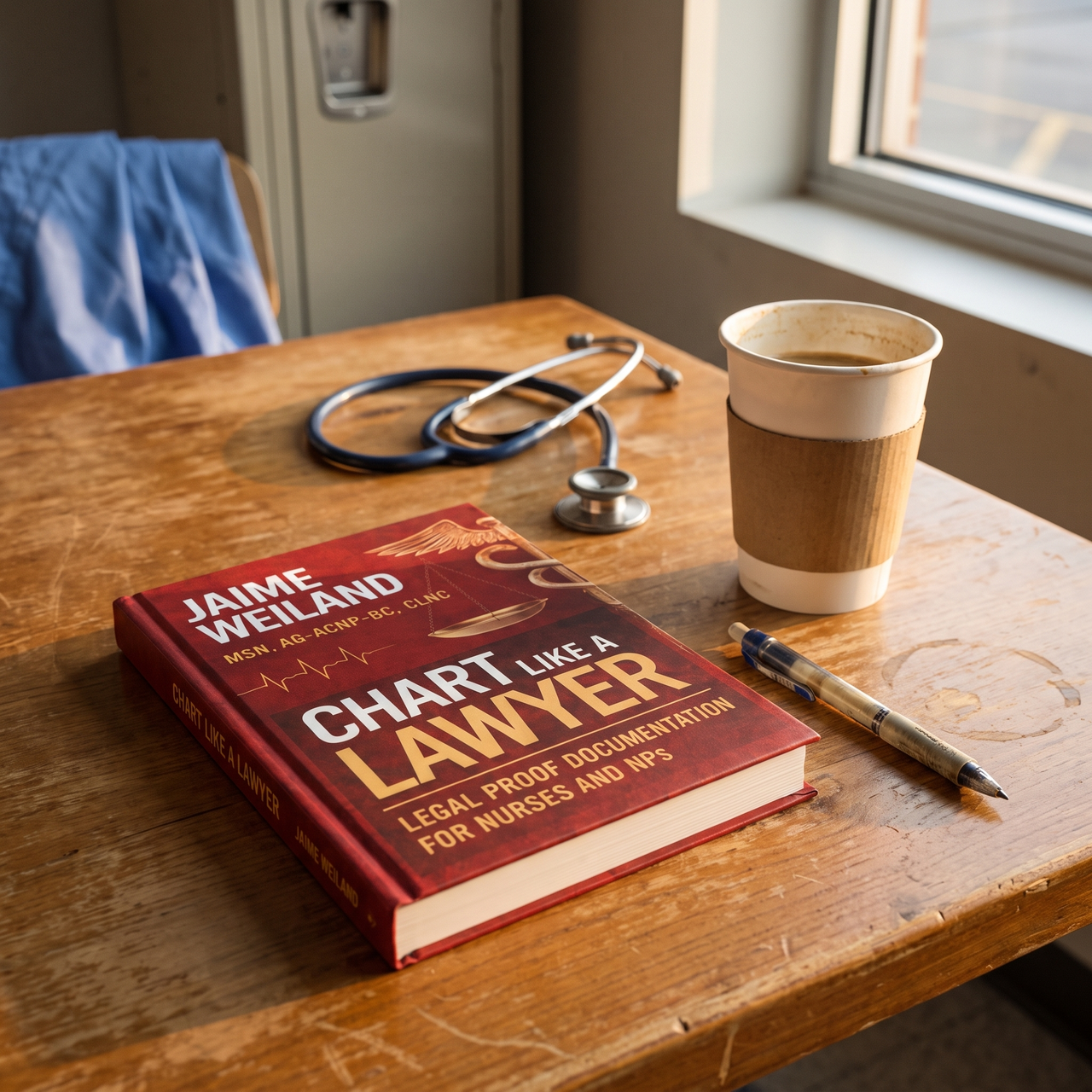
It was written by Jaime Weiland, a nurse practitioner who's lived your exact shift, and a legal nurse consultant whose job is reading charts the way the hospital's attorney reads them. It doesn't take time you don't have or details you can't recall. It works on any shift, at any ratio, because it's about how you write the note, not how much. Follow the examples — the weak note and the protected note, side by side — and you'll chart differently by your very next shift. And the whole book costs under forty dollars: less than one takeout dinner, with no course or subscription waiting at the end of it.
KNEW EXACTLY WHAT TO WRITE
Rebecca L.
Verified Buyer
"I expected another dry textbook. Instead it showed me the weak note next to the protected note, over and over. By my next shift I was already charting differently. The 'will continue to monitor' section alone was worth it."
5.
IMAGINE SAYING "REFERENCE MY CHART" AND WALKING OUT
Picture it going the other way. The letter still comes. But this time you're not up at 2 a.m. trying to remember a patient you cared for years ago. You walk into that room, the questions start, and you simply point to the page. No eight-hour grilling. No talking yourself into a corner. You say some version of reference my chart — and you're out in twenty minutes, because years ago you wrote your own defense without even knowing you'd need it.
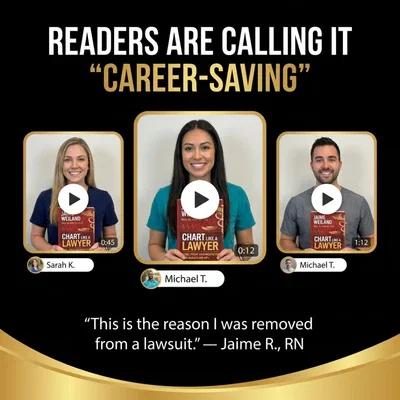
That's what nurses tell us again and again. Veterans with thirty years in say they wish they'd had it at the start. New grads say they finally feel like they know what they're doing. One nurse was removed from a lawsuit completely — pulled out of it — because of how she'd charted. Her words: what I charted is what happened. That was the entire defense.
For less than the price of a takeout dinner, you get the exact skill that decides which nurse you'll be in that room — the one grilled for eight hours, or the one who points to the page and leaves. It protects the license you spent years and thousands of dollars to earn. It's already sold out once because word spread so fast among nurses. And there's a guarantee: read it, and if it doesn't change how you chart, you're covered. The only real risk left is charting one more shift the old way and hoping the room never comes. Tap below and grab your copy while it's in stock.
Denise H.
Verified Buyer
"I was named in a suit two years after caring for a patient I barely remembered. I pointed to my chart and repeated the same thing until they let me go. What I charted is what happened — and that's the only reason my name came off it. This book teaches you to chart exactly like that, before you ever need it."
THE HOSPITAL PROTECTS THE HOSPITAL. YOUR CHART PROTECTS YOU.
CHART LIKE A LAWYER
By Jaime Weiland — Legal-Proof Documentation for Nurses & NPs. Learn to chart so it protects you.
$59.99
Only $39.99




4.8 Stars — 10,000+ Verified Reviews
GET THE BOOK →