
5 REASONS WHY YOUR MALPRACTICE COVERAGE WON'T STOP THE BOARD FROM COMING AFTER YOUR LICENSE
★★★★★
4.9 Stars — 11,000+ Verified Nurse Readers
1.
YOU'VE BEEN INSURED AGAINST THE WRONG LOSS THE WHOLE TIME
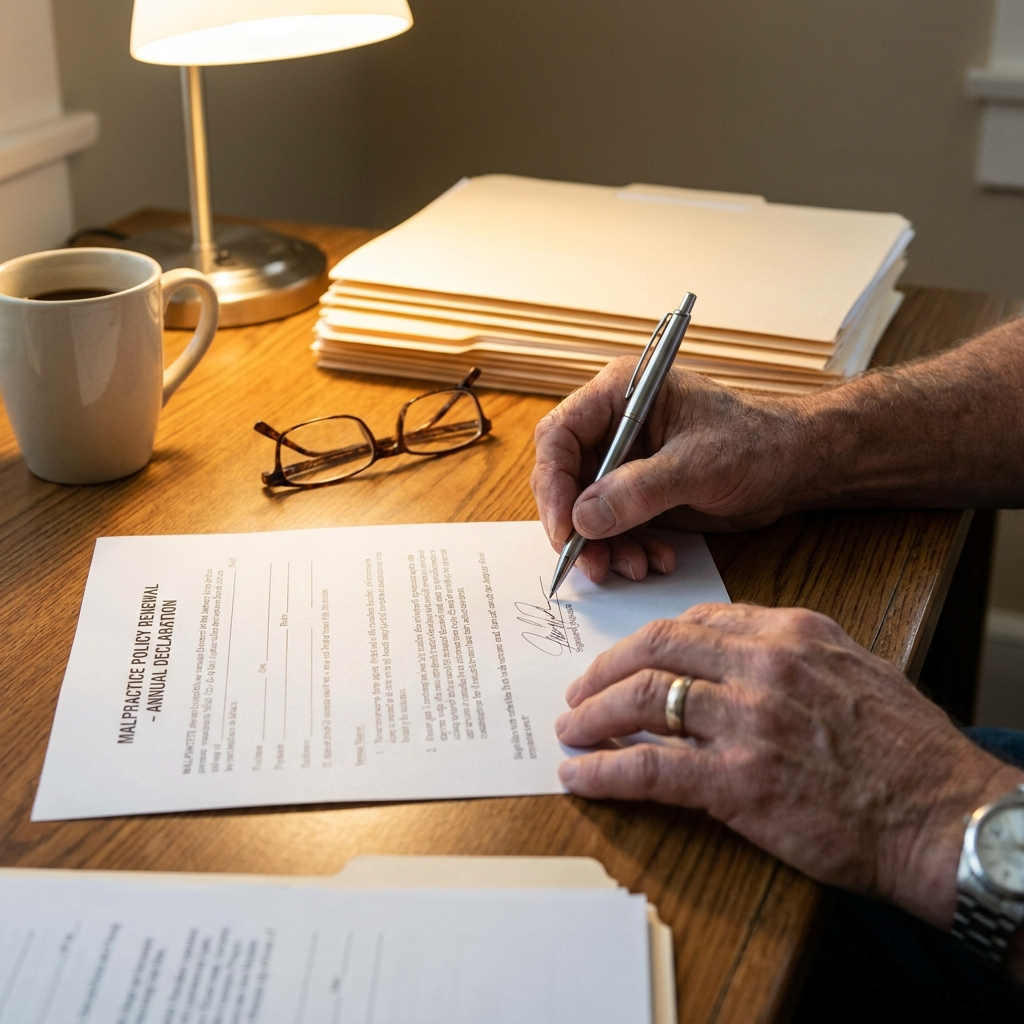
Every year the renewal comes. You look at the premium, you sign, you move on. And somewhere underneath, a quiet piece of you relaxes — because you're covered. Whatever happens, you did the responsible thing. That policy is the reason you can practice without a knot in your stomach.
It's a reasonable thing to feel. It's just built on an assumption nobody ever corrected. Because a malpractice policy is generally constructed around civil liability — the lawsuit, the settlement, the money. That's the loss it's designed to absorb. That's what the premium is buying.
But your license doesn't live in that category. It isn't money and it can't be settled. It's the credential your entire livelihood, your mortgage, and every year you invested rests on — and it sits on a completely separate track from the thing you've been paying to protect. The coverage is real. It's just covering the wrong loss. You've had a safety net under one side of the room this entire time, and the drop you're most afraid of is on the other.
I ASSUMED I WAS COVERED
Teresa K.

Verified Buyer
"I'd renewed my policy every year for eleven years without once reading what it actually covered. Finding out my license sits on a completely different track than my liability coverage was genuinely unsettling. I'd been relaxed about the wrong thing."
2.
A LAWSUIT AND A BOARD COMPLAINT ARE TWO SEPARATE ROADS
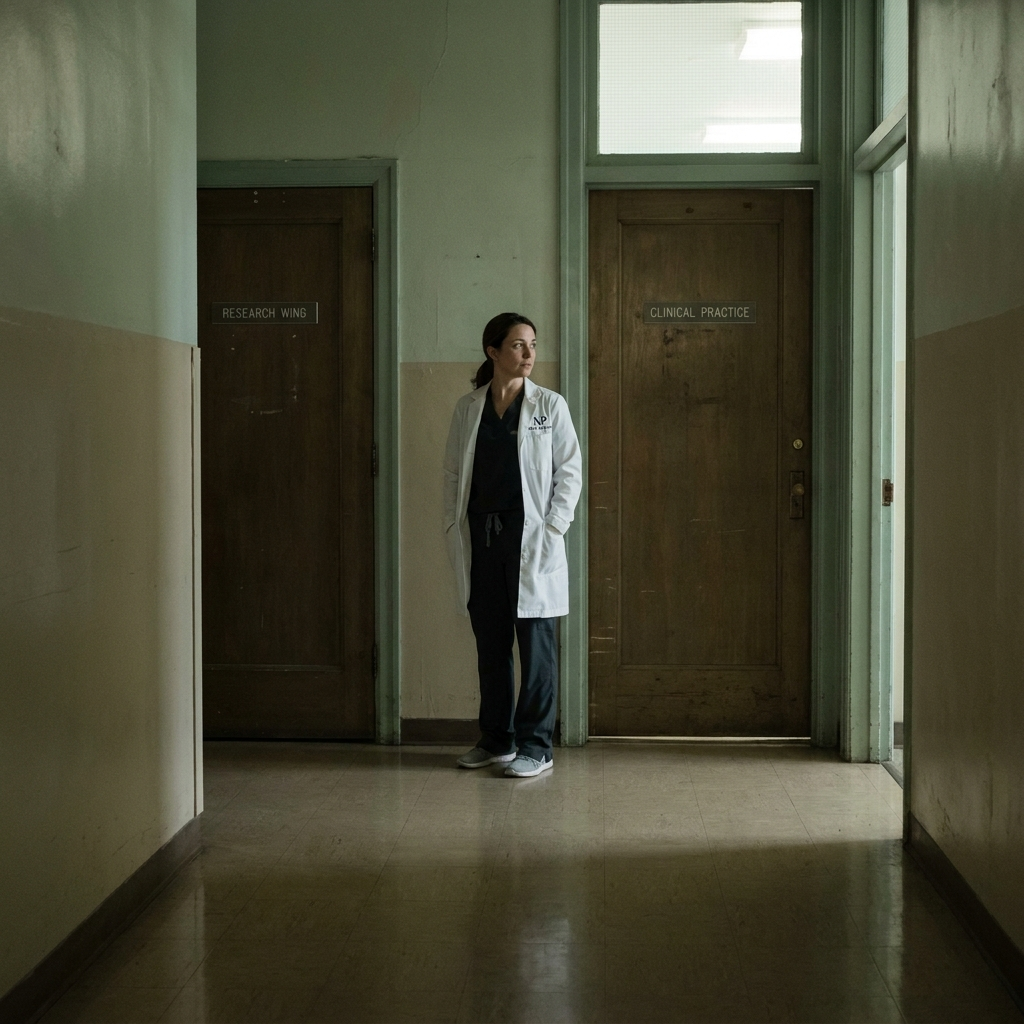
Most NPs picture one bad outcome and one process: something goes wrong, someone sues, insurance handles it. But that's one road. There's a second one running right alongside it, and almost nobody is told it exists until they're standing on it.
One road ends in a settlement — a number, negotiated, with someone else writing the check. The other ends in whether you're permitted to practice at all. Different body, different rules, different question entirely. And they can run at the same time, from the same patient, on the same day. The first one closing doesn't touch the second. You can watch a suit resolve quietly and still be sitting in front of a board months later, alone, explaining a note you don't remember writing.
That's the part that catches experienced NPs off guard. The insurance question is "what does this cost?" The board's question is "should this person keep practicing?" You can be fully covered on the first and completely exposed on the second — and the years of premiums you paid so faithfully have nothing to say about it.
TWO SEPARATE THINGS ENTIRELY
Denise H.
Verified Buyer
"I always thought a lawsuit and a board issue were the same event. They're not. A colleague had her suit settle and then spent another year in front of the board over the same patient. That's when it hit me how little I understood about my own risk."

3.
THE BOARD DOESN'T NEED A LAWSUIT. IT ONLY NEEDS A COMPLAINT.
Here's where it turns. A lawsuit needs a plaintiff, damages, and an attorney willing to take it. A board complaint needs a form. That's it. A frustrated patient, a family member looking for someone to blame, a coworker who resents you — any of them can file, and the board is obligated to investigate. Nothing about your policy has a say in whether that starts.
And whatever route it takes, it always lands in the same place: what your chart says about your judgment. That's the thing that catches NPs specifically. You aren't primarily liable for tasks — you're liable for decisions. The differential you considered, the reason you chose this over that, the risk you weighed and accepted. That reasoning is the core of your practice and the core of your exposure. And it's the thing almost no note ever records.
That's the realization underneath all of it. You've been protected against a cost. You were never protected against the question. Your certifications prove you're competent, your policy handles the money, and neither one shows a board reviewer how you were thinking on a Tuesday two years ago. Only the chart can do that. Most NPs were never taught to write one that does, because nobody teaches defensive documentation. One legal nurse consultant set out to change that.
FINALLY UNDERSTOOD THE REAL ISSUE
Priya S.
Verified Buyer
"I'd been practicing for fifteen years believing my credentials and my coverage were my protection. This showed me the chart is the only thing that speaks for your judgment. Completely changed how I document every decision I make now."
4.
WHATEVER ROUTE IT TAKES, IT COMES DOWN TO THE SAME DOCUMENT
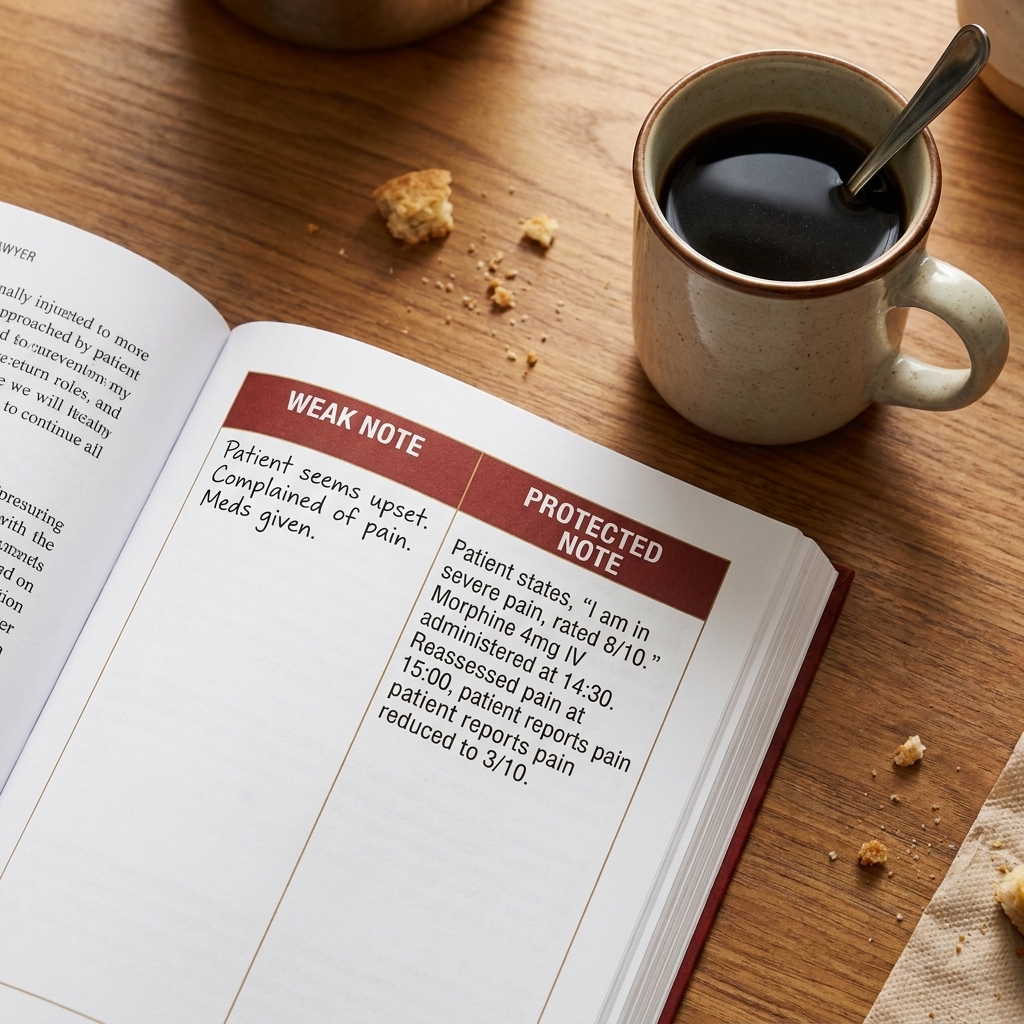
The reason it works when other resources don't: it's a way of reading your own notes, not a pile of tips. You learn to see one phrase the way a plaintiff's attorney will, then the next, and each fix quietly makes the one after it easier. You're never asked to chart more or stay later — just to write the same note a smarter way, so it stands on its own years from now.
A few of the first fixes:
Kill the phrase that hangs nurses — Swap "will continue to monitor" for a specific, documented action, so it can't be twisted into proof you saw a problem and did nothing.
Pair every quote with a fact — Follow a patient's words with an objective finding, so no lawyer can argue you wrote it to mock or dismiss them.
Prove you escalated — Document the call the moment you make it, so there's a record you notified the provider — not just your word two years later.
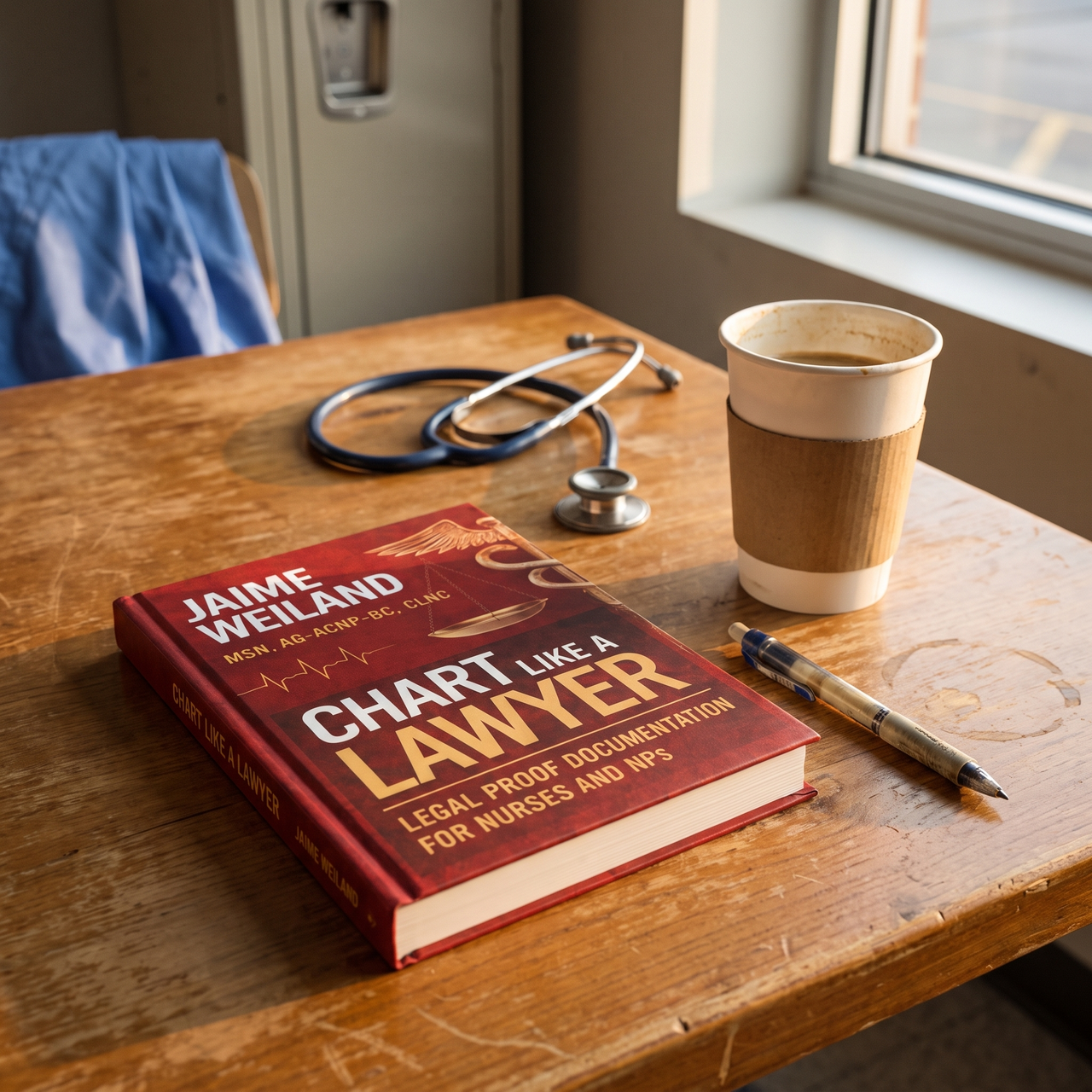
It was written by Jaime Weiland, a nurse practitioner who's lived your exact shift, and a legal nurse consultant whose job is reading charts the way the hospital's attorney reads them. It doesn't take time you don't have or details you can't recall. It works on any shift, at any ratio, because it's about how you write the note, not how much. Follow the examples — the weak note and the protected note, side by side — and you'll chart differently by your very next shift. And the whole book costs under forty dollars: less than one takeout dinner, with no course or subscription waiting at the end of it.
KNEW EXACTLY WHAT TO WRITE
Rebecca L.
Verified Buyer
"I expected another dry textbook. Instead it showed me the weak note next to the protected note, over and over. By my next shift I was already charting differently. The 'will continue to monitor' section alone was worth it."
5.
THE ONLY COVERAGE THAT REACHES YOUR LICENSE IS A SKILL NO ONE TAUGHT YOU
Picture the letter arriving — and your stomach not dropping. Not because a policy is going to absorb it, but because you know exactly what's in your charts and you know they hold. Your reasoning is on the page. Your calls are timestamped. Every question they could ask is already answered in your own words, written years before anyone thought to ask. The complaint meets a record that speaks for you, and it goes nowhere.
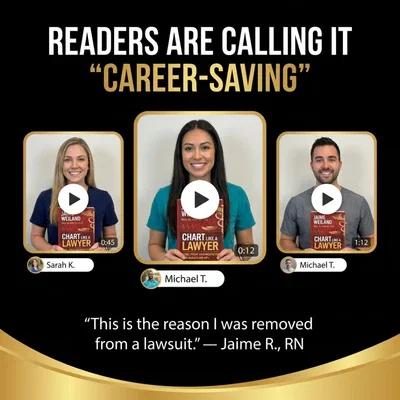
That's what nurses and NPs tell us again and again. Veterans with decades in say they wish they'd had it at the start. New grads say they finally feel like they know what they're doing. One nurse was removed from a lawsuit completely — pulled out of it — because of how she'd charted. Her words: what I charted is what happened. That was the entire defense.
For less than the price of a takeout dinner, you get the one protection no premium sells you — the skill that reaches the license your whole livelihood rests on, the thing you've spent years and thousands of dollars building. It's already sold out once because word spread so fast among nurses. And there's a guarantee: read it, and if it doesn't change how you chart, you're covered. The only real risk left is practicing one more day insured against everything except the loss you actually fear. Tap below and grab your copy while it's in stock.
Karen M.
Verified Buyer
"Someone filed a complaint about me about a year after I read this. I wasn't even worried — my reasoning was documented on every visit. It closed quickly with nothing to pursue. My malpractice policy had nothing to do with it. My charting did."
THE HOSPITAL PROTECTS THE HOSPITAL. YOUR CHART PROTECTS YOU.
CHART LIKE A LAWYER
By Jaime Weiland — Legal-Proof Documentation for Nurses & NPs. Learn to chart so it protects you.
$59.99
Only $39.99




4.8 Stars — 10,000+ Verified Reviews